
Why Consistency Beats Virality in Podcast Growth
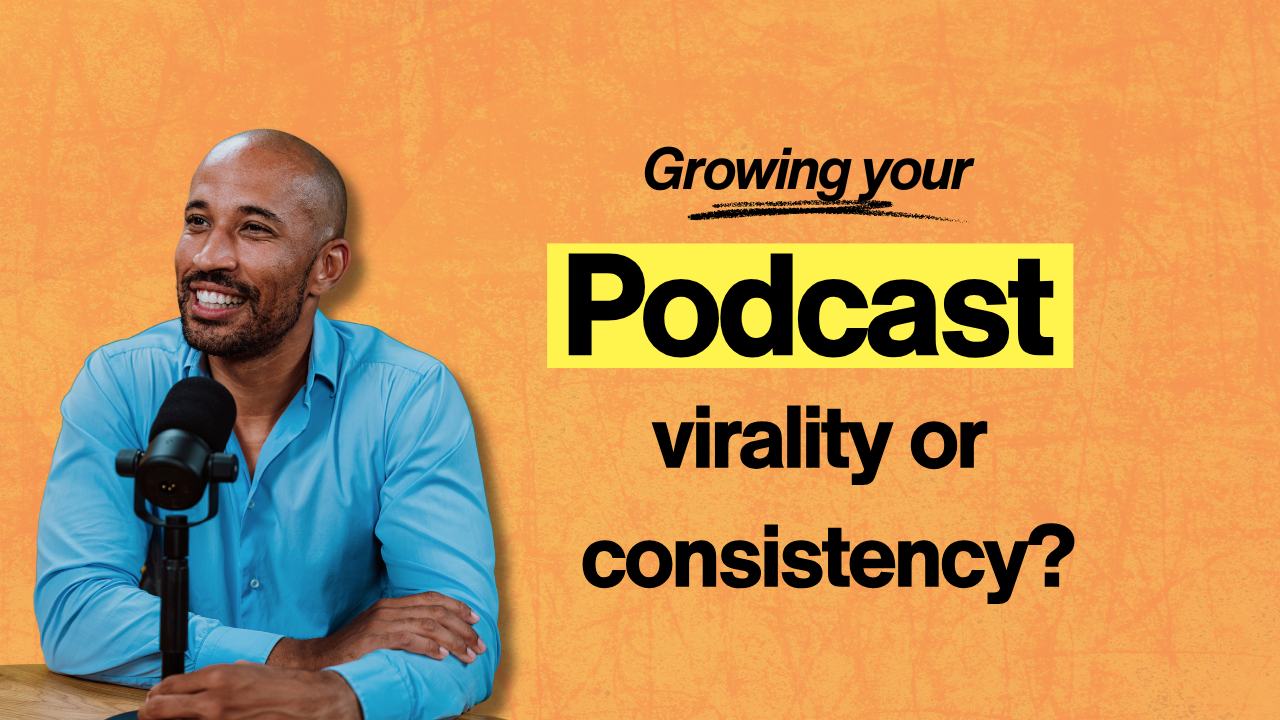
Will virality or consistency best serve your podcast?
In the early stages of launching a podcast, you’re likely brimming with uninformed optimism. You think to yourself: “Surely a viral moment will come in the next few weeks, elevating my name and podcast into the charts.” A spike in downloads? A share from a major voice in their industry? A sudden surge of attention that validates the effort?
It is an understandable instinct. We are surrounded by stories of overnight success. Social platforms reward peaks of attention and marketing culture celebrates big numbers.
Unfortunately, podcasting operates on a different timeline.The podcasts that drive real commercial outcomes are rarely built on singular moments of exposure. They are built on showing up again and again, earning trust, and iterating on what works over extended periods.
Podcasting Is a Relationship Channel
A podcast is an ongoing presence in someone’s professional life.
Your listeners are often commuting, walking between meetings, or preparing for their day. They are choosing to spend between thirty and sixty minutes with your thoughts, feelings, and chosen network. That level of attention is closer to a professional relationship than a piece of content consumption.
I see too many social media video editors dying on the hill of:
“Your long-form only exists to batch bake short-form.”
Wrong, wrong, so wrong.
The power of podcasting exists in the relationship between the audience and the host. The short form exists to promote your podcast, remind existing followers of new releases, and act as promotional material that guests can share across their channels.
64% of Podcast listeners actively seek out podcasters and intentionally spend time with their content. Users aren’t only coming across social media content and stumbling into an episode. The key word is ‘actively.’ They are actively seeking out and looking for people who can educate, entertain, and relate to them via long-form content.
Your short form content should exist somewhat subservient to the needs of the long-form. By that I mean: Don’t turn your podcast into a clip farming operation. Use short-form to strategically promote the benefits of listening to your episode in full.
Ultimately, every episode reinforces three signals:
You are active in your field
You are generous with your knowledge
You are dependable
These signals accumulate cumulatively. Weeks turn into months. Listeners begin to recognise your voice, your approach, and your perspective on problems they care about. The short form will provide small spikes, but the true growth comes from consistency.
The (Half) Myth of the Viral Episode
Many people imagine podcast growth as a ladder with sudden jumps. One episode performs dramatically better and lifts the entire show. There is some element of truth to this as I mentioned earlier, but it’s complicated, especially for B2B podcasts.
In practice, even widely shared episodes produce short lived spikes. Downloads can rise briefly and return to baseline. New listeners who arrive through a single recommendation often sample and leave if there is no consistent cadence waiting for them.
Podcast audiences grow through habit formation.
When your show appears every Tuesday morning, or every second Thursday, you begin to occupy a predictable space in your listener’s routine. You become part of how they stay informed.That routine is far more valuable than a temporary surge of attention.
This might be a bit controversial to admit (and I might regret revealing this) but one of the most endlessly frustrating parts of my job is trying to communicate the importance of habit over virality to clients. When I hear "listeners and downloads have dropped over this month, what’s up with that?” I have to gently explain that it’s all cumulative.
Just because a recent reel got 20K views, doesn’t mean you can get away with not releasing an episode one week and see the same results.

Make your podcast predictable and you’ll reap the rewards
Predictability Also Makes Your Podcast Easier to Recommend
Referrals drive a significant proportion of podcast discovery in professional sectors. People recommend shows to colleagues when they know the show will continue delivering value.
A consistent publishing rhythm gives your existing listeners confidence to share your podcast. They know what they are recommending. They know the next episode will arrive as expected.
Inconsistent publishing creates friction. Listeners hesitate to recommend something that feels dormant or irregular.
Reliability strengthens word of mouth. Word of mouth drives qualified listeners. Qualified listeners become clients. Be honest with yourself: can you commit to recording once a week, or do you need to batch record? Can you release 4 episodes a month, or 2 episodes?
Please don’t release sporadically, it’s one of the most damaging things you can do for your podcast, as you start being seen as unreliable. Release in seasons, or at a reduced rate if you’re struggling with your current schedule.
Consistency Builds Authority Through Volume of Insight
Consultants and service providers are selling expertise. Authority is demonstrated through the depth and breadth of ideas you share over time.
One episode can introduce a concept. Twenty episodes can explore a methodology. Fifty episodes can map an entire philosophy of practice. Hence this consistency allows you to create a body of work.
This body of work becomes a reference point for potential clients who are evaluating whether you understand their challenges. They can see how you think across multiple scenarios. They can hear how you approach nuance, uncertainty, and decision making.
Like I said earlier, it’s all cumulative. Authority itself is cumulative, and people defer to authority when they can see consistent results and hear valuable insights over a long period.
How Consistency Improves Your Own Performance as a Host
There is another layer to this conversation that I don’t see mentioned enough. Consistency benefits the host as much as the audience!
Hosting is a skill. Interviewing is a skill. Structuring conversations that reveal insight is a skill.
These abilities sharpen through repetition and comfortability. When I look back at some of my clients’ first episodes and compare them with episode 100, the difference is unbelievable. You will make mistakes in the beginning, and part of overcoming them is just showing up each week and forming that habit.
Consistency creates the conditions for mastery. Think of it like the gym if that helps.
What Does Consistent Podcast Production Look Like?
Consistency does not require weekly publishing if that cadence is unsustainable. The key is choosing a rhythm you can maintain without disruption.
For many consultants, I find a fortnightly recording schedule provides the right balance between quality and manageability. Monthly can be draining if you are recording 4 episodes in one day. Weekly can be hard to stick to for some people, especially if they are in the beginning stages of their business, frequently travelling, or full-time parents.
Here’s a few examples of consistency that can lead to podcasting success:
Recording sessions in batches
Having a permanent ‘set and forget’ recording setup
Maintaining a clear episode pipeline
Planning themes in advance
Protecting time for recording in your calendar
Podcast growth is operational, and systems matter more than bursts of energy.
Playing the Long Game
The most successful business podcasts share a common characteristic. They stayed in motion long enough to become part of their industry’s landscape.
They were not built on moments of visibility. They were built on persistence.
If you approach podcasting with the mindset of publishing useful conversations on a dependable schedule, growth becomes a byproduct of trust, and trust becomes a driver of opportunity.
Consistency is what allows your podcast to function as an extension of your professional reputation.
At MKM Audio, this is the principle I build around when producing shows for consultants and service businesses worldwide. A well produced podcast released consistently becomes a strategic asset that supports authority, visibility, and lead generation for years to come.
Virality is unpredictable. Consistency is controllable. Pick your poison:
Unpredictability or repeatability?